Fortune Hunter: Golden Saga
- 4.7
- Rating
- 1.00M
- Installs
- Free
- Price

 Analysis by App-foxy
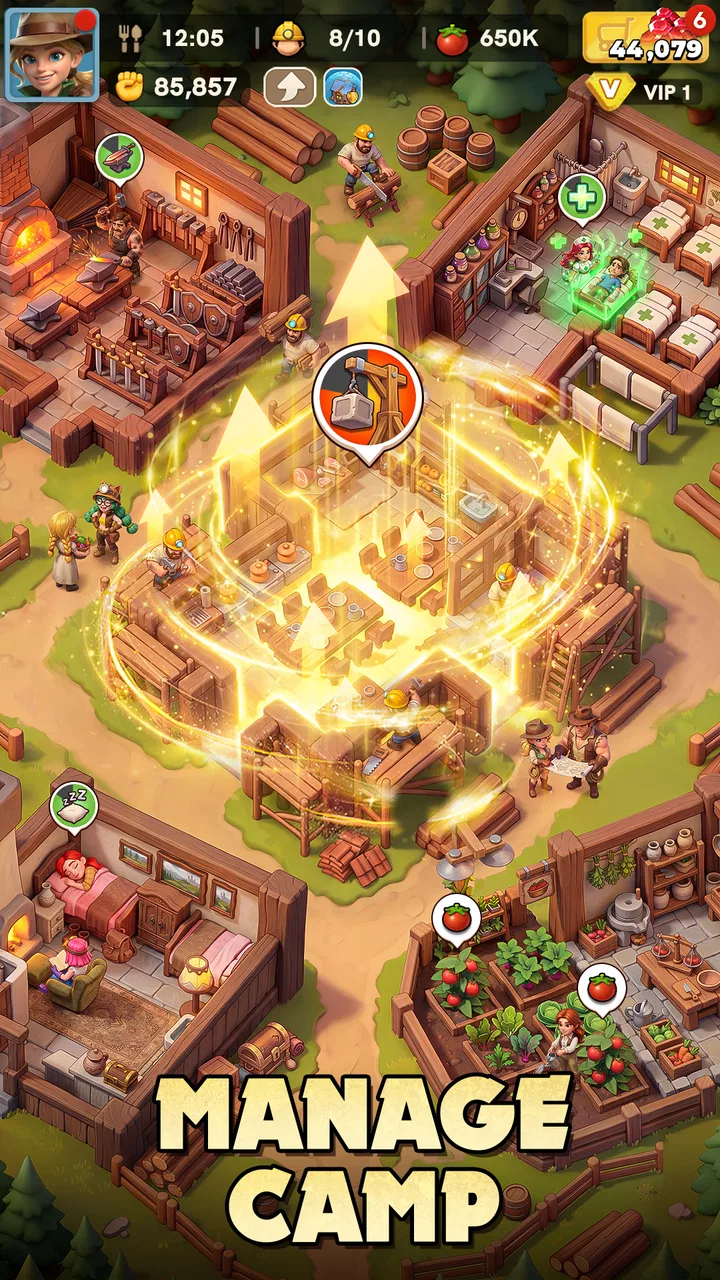
Fortune Hunter: Golden Saga is a strategy game from StarFortune that aims for a very simple fantasy: build wealth, make smart choices, and turn a small beginning into a kingdom built around gold. I spent time with it as the kind of game you might open during a short break, then return to when you want something more involved than a quick arcade round. Its first impression is easy to understand, but its lasting value depends on whether you enjoy repeating planning and progression loops rather than chasing a story with a clear ending.
The game is free to download and is rated Teen, which makes it accessible to a broad audience while still suggesting that some of its themes or interactions may be better suited to older players. StarFortune has placed it in the strategy category, and that label matters: this is not simply a treasure hunt where luck does all the work. The appeal comes from deciding how to use what you earn, when to push ahead, and when to protect your progress instead of taking a risk.
From exciting treasure hunt to a repeatable routine
I found the shift from an exciting treasure premise to a repeatable routine is the key test of whether this game stays enjoyable. A useful way to judge that is to notice whether each visit still involves a choice you care about, rather than simply repeating actions out of habit. That distinction leads naturally to how the opening appeal holds up over time.
You May Also Like

 Blood Strike: 2.5 Anniversary
Blood Strike’s Loadouts Turn Every Drop Into a Tactical Gamble
A close look at Blood Strike’s custom loadouts: how fast access to signature weapons reshapes its battle royale rhythm, rewards preparation, and narrows the gap between fights.

 Pandora - Music & Podcasts
Pandora’s Music Is Easy to Start, but Harder to Recover
Pandora’s strength is its low-effort path from a seed to a station. Its weak spot is how much confidence it asks you to place in connection, setup, and quiet recovery.

 8 Ball Pool
 Is Built on Rivalries, Rematches, and Routine
A close look at the rivalries, rematches, shared routines, and unanswered safety questions that turn a quick pool match into a persistent mobile community.

 Samsung Music
’s Quiet Strength Is Playing What You Already Own
Its reach comes less from spectacle than from dependable access to a personal library. That simplicity is both the app’s strongest retention engine and its ceiling.

 AccuWeather: Weather Radar
AccuWeather Review: A Quick, Clear Forecast for Everyday Decisions
For everyday plans, the best forecast is the one you can understand quickly. AccuWeather makes rain timing, radar, and local conditions easy to act on, with a few trade-offs.

 Hill Climb Racing
Why Hill Climb Racing Still Turns Crashes Into One More Run
A tiny car, a bumpy hill and one more upgrade: Hill Climb Racing keeps resurfacing because its simple chaos makes every near-miss feel personal.
More From Our News Desk
View All News


Why the first week feels inviting
During the opening sessions, the gold-and-kingdom theme gives the game a clear direction. I always find it easier to stay interested in a strategy title when the central goal can be understood without a long explanation, and Fortune Hunter: Golden Saga has that advantage. You are not asked to learn an abstract system with no visible reward. The promise of treasure is tied to the growth of your realm, so each improvement feels connected to the larger fantasy.
The first week is also when a free strategy game has its strongest natural momentum. Early progress tends to make every decision feel important. A modest reward can change what you can do next, and a new upgrade or opportunity gives you a reason to return later. That rhythm works particularly well for players who like checking a game several times a day rather than sitting down for one long session.
My most useful early habit was to avoid treating every reward as permission to spend immediately. In games built around accumulating wealth, the tempting choice is often the visible upgrade in front of you. I found it more satisfying to pause and consider whether the purchase would improve my next few decisions or merely make the current screen look more advanced. The strongest early advantage comes from preserving flexibility, not from spending as soon as gold appears.
That is a small distinction, but it changes the feel of the game. If you rush through the first improvements, the opening can become a sequence of automatic taps. If you treat each choice as part of a short plan, the strategy layer becomes more noticeable. I would recommend newcomers decide on a simple near-term goal before each session: build toward a particular improvement, save for a larger step, or recover from an expensive choice. That keeps the game from becoming aimless.
A realistic everyday use case
Fortune Hunter: Golden Saga fits naturally into a busy day. Imagine opening it while waiting for a train, making a few decisions, and closing it before your stop. Later, during a lunch break, you can check what has changed and decide whether to continue investing or hold resources. This kind of use is more convincing to me than the idea of playing it as a full evening replacement for a larger strategy game.
The short-session approach also helps reveal whether the game suits you. If you enjoy returning to the same kingdom and gradually improving it, the routine can feel comforting. If you need a new challenge every few minutes, the repeated focus on treasure and development may seem narrow. The game has a specific mood and pace; it is not trying to be a sprawling tactical simulation.
What makes the strategy feel meaningful
The most interesting decisions are not necessarily the biggest ones. I paid closer attention to the order of improvements than to the individual rewards. A small benefit that supports several later choices can be more valuable than a larger-looking gain that leaves you short of the next useful step. This is the sort of trade-off that gives a simple economy a little depth without demanding that you keep a spreadsheet open.
Another useful approach is to separate progress into two mental pools: resources for immediate development and resources kept as a safety margin. That reserve matters when the game presents an attractive opportunity at an inconvenient moment. Spending everything can make the next session feel like recovery rather than progress. Players who dislike feeling blocked should be especially careful here.
I also found that the game is easier to judge when I stop measuring success only by how quickly the kingdom grows. A slower session can still be productive if it leaves the next decision clearer. This is an important difference between a game that rewards attention and one that merely rewards constant activity. Fortune Hunter: Golden Saga works best when you give each choice a reason.
Where it differs from usual strategy alternatives
Compared with a traditional city-building strategy game, this title feels lighter and more focused. A larger city builder usually offers more systems to manage, more visual detail, and a broader sense of place, but it also asks for more time and concentration. Fortune Hunter: Golden Saga is easier to pick up when you want a compact progression loop rather than a long planning session.
It also differs from competitive strategy games. If your favorite part of the genre is outsmarting another player in a match, this may not provide the same tension. Its appeal is more personal: improve your own position, make better choices, and keep the treasure-building cycle moving. That makes it less stressful, but it can also reduce the urgency that comes from facing a human opponent.
Against casual idle-style games, the strategy label gives the experience a little more involvement. You are not simply watching numbers rise. The trade-off is that it may demand more attention than a game designed to be left alone. I would choose Fortune Hunter: Golden Saga when I want to participate in my progress, not when I want a completely hands-off background game.
How the game holds up after the novelty fades
The first month is the real test. The initial treasure fantasy can carry the opening, but a lasting game needs reasons to return after the basic surprise has disappeared. In my experience, the recurring value here comes from refining your routine. You begin to recognize when saving is wiser, which decisions deserve more thought, and how to make a short session feel productive.
That value is steady rather than dramatic. I did not see the game as something that constantly reinvented itself. Instead, it asks whether you enjoy improving the same general process over time. For some players, that is exactly the point. The pleasure comes from becoming more efficient and watching a kingdom develop through repeated attention.
For others, the same structure can feel repetitive. If you need frequent changes in objectives, a strong narrative, or a constant stream of new mechanics, the gold-centered loop may not hold your interest for long. This is where the average rating of 3.1 from around 34 ratings becomes useful context: the game has found an audience, but the reception is not so strong that I would recommend it blindly to every strategy fan.
Spending, patience, and the free-to-play balance
Because the game is free, the first question for many players will be whether it can be enjoyed without paying. I approached it with that expectation, and my advice is to play patiently before considering any purchase. The available in-app purchases range from $0.99 to $99.99 per item, a wide span that makes it especially important to decide what kind of player you want to be before spending.
Small purchases can feel harmless when they solve a short-term inconvenience, but repeated convenience spending can change the way you experience progression. I prefer to wait until I understand which part of the routine genuinely frustrates me. Paying to remove a problem you have not yet identified is rarely good value. If you do spend, set a personal limit first and treat it as entertainment money rather than as a shortcut to proving that the game is worth your time.
Players who want a completely even playing field may be uncomfortable with any strategy game that offers paid advantages or conveniences. Players who are happy to progress slowly will have a better chance of enjoying the free path. The important trade-off is not simply price; it is whether spending changes the decisions you came to make in the first place.
The maintenance burden of keeping a kingdom alive
Long-term enjoyment depends on how much attention the game expects between meaningful decisions. A strategy game can become tiring when returning feels like housekeeping rather than play. I watched for that feeling by asking a simple question each time I opened it: am I making a choice, or am I only clearing tasks because the game expects me to?
Fortune Hunter: Golden Saga is best approached as a game with a manageable routine, not as a second job. I would create a regular check-in pattern rather than opening it every time I remember it exists. A short visit with a clear objective is more rewarding than repeatedly checking for tiny changes. This also reduces the risk of letting the game occupy attention without providing much enjoyment.
One practical method is to finish each session with a note in your own mind about the next target. It might be a saving goal, a development decision, or simply a point at which you want to reassess your strategy. That makes the next visit feel intentional. Without a target, the game can blur into a sequence of similar actions, especially after the opening excitement has passed.
The current version is 1.1.1670796, and the game supports devices running Android 5.1 or later. That broad system compatibility is helpful for people using older Android hardware, although the experience will still depend on the individual device. I would check how comfortably the game runs on your phone before committing to a daily habit, particularly if you use an older model for gaming.
What creates fatigue over time
The biggest source of fatigue is repetition without a fresh decision. Treasure, upgrades, and kingdom growth are appealing ideas, but they can lose their impact when every session follows the same emotional pattern. I noticed that the game is more enjoyable when I set a specific purpose for returning. Otherwise, the act of collecting and improving can become automatic.
Another possible frustration is the tension between patience and acceleration. The free route asks you to accept slower progress, while the purchase options offer a way to reduce waiting or soften a difficult stretch. That tension is common in free strategy games, but it is still worth naming because it affects whether the game feels relaxing or pressuring. If you dislike being reminded that progress can be sped up with money, this may not be a comfortable long-term choice.
The Teen rating is also worth considering for households. I would not treat the label as a detailed description of every moment in the game, but parents should still review the experience themselves before handing it to a younger player. In-app purchases make device-level spending controls sensible, especially when several people share access to the same phone or tablet.
Fatigue can also come from expecting the wrong kind of variety. This is not the game I would choose when I want a new map, a new story chapter, or a completely different challenge every time I play. Its identity is built around developing one central fantasy. That focus is a strength for players who like consistency, but a limitation for players who need constant surprise.
Who should make room for it?
I would recommend it to someone who enjoys light strategy, gradual wealth-building, and short return visits. It is a good candidate for a player who likes making small plans and seeing them pay off later. It may also suit people who find competitive matches too demanding but still want more involvement than a purely passive idle game offers.
I would be more cautious with players who want deep tactical combat, a substantial campaign, or a strategy experience built around direct competition. A traditional city builder may be better if you want a larger world to shape. A premium strategy game may be a better fit if you want to avoid purchase prompts altogether. A puzzle strategy title may suit you more if you prefer every session to present a self-contained problem.
The game is also not ideal for anyone who tends to spend impulsively in free-to-play titles. The broad purchase range means self-control matters. I would first play long enough to understand whether the underlying routine is enjoyable without help. If it is not, paying to accelerate it will probably not fix the deeper issue.
My long-term verdict
After the novelty fades, Fortune Hunter: Golden Saga earns its place only if you enjoy the habit it creates. Its strongest quality is the clear connection between treasure gathering and kingdom development. That gives short sessions a purpose and makes modest decisions feel connected to a larger goal. StarFortune has chosen a focused concept rather than an overloaded strategy package, and I appreciate that clarity.
Its weaknesses are equally clear. The loop can become repetitive, the free-to-play structure requires patience, and the game may not offer enough variety for players who want a constantly changing challenge. The mixed reception, with around 100K+ installs and only 4 reviews alongside the average rating, suggests that the audience is still relatively small compared with established strategy games, so I would approach it as a niche option rather than a safe recommendation for everyone.
My advice is to try the free version with a simple rule: do not spend during the first stretch, and do not judge it by how quickly the kingdom grows. Judge it by whether you look forward to making the next decision. If you enjoy planning around limited resources and returning to improve a familiar system, it can become a pleasant part of your routine. If you find yourself opening it only to collect rewards or feeling pushed toward purchases, it is better to move on.
Fortune Hunter: Golden Saga does not need to dominate your phone to be worthwhile. For me, its lasting appeal is modest but real: it works as a compact strategy habit for patient players who like building progress one decision at a time. I would keep it installed for that audience, while recommending a deeper city builder or a premium strategy game to anyone looking for richer variety, stronger competition, or a more complete long-term experience.
FAQs for Fortune Hunter: Golden Saga
01What is the main objective of Fortune Hunter: Golden Saga?
Fortune Hunter: Golden Saga is an adventurous treasure-hunting game where players embark on a quest to uncover hidden riches. The main objective is to complete various levels by solving puzzles and overcoming obstacles, all while collecting valuable artifacts and treasures. The game combines strategy, exploration, and action to create an engaging experience.
02Is Fortune Hunter: Golden Saga free to play?
Yes, Fortune Hunter: Golden Saga is free to download and play. However, it does offer in-app purchases for players who wish to speed up their progress or acquire special items. These purchases are entirely optional, and players can enjoy the full game without spending money by progressing through levels and earning rewards.
03What are the system requirements for Fortune Hunter: Golden Saga?
Fortune Hunter: Golden Saga is designed to run smoothly on most modern Android and iOS devices. It requires Android version 5.0 or higher and iOS version 11.0 or later. The game is optimized for both smartphones and tablets, ensuring a seamless experience across different screen sizes and resolutions.
04Does Fortune Hunter: Golden Saga require an internet connection?
Fortune Hunter: Golden Saga can be played offline, allowing players to enjoy the adventure without an internet connection. However, some features, such as leaderboards and in-app purchases, may require connectivity. It's recommended to connect occasionally to sync your progress and access the latest updates and events.
05How does the multiplayer feature work in Fortune Hunter: Golden Saga?
Fortune Hunter: Golden Saga includes a multiplayer mode where players can team up with friends or compete against others in special events. Players can join or create teams to tackle challenges together, share resources, and climb the leaderboards. This feature enhances the social aspect of the game, fostering a community of treasure hunters.
Pros
- Engaging storyline keeps players hooked.
- Intuitive controls for smooth gameplay.
- Stunning graphics enhance the experience.
- Regular updates with new content.
- Multiplayer mode for added fun.
Cons
- In-app purchases can be costly.
- Requires a stable internet connection.
- Battery consumption is high.
- Some levels can be repetitive.
- Occasional ads interrupt gameplay.

Fortune Hunter: Golden Saga
Gallery